Oil Quench vs Water Quench: Complete Guide for Bladesmiths
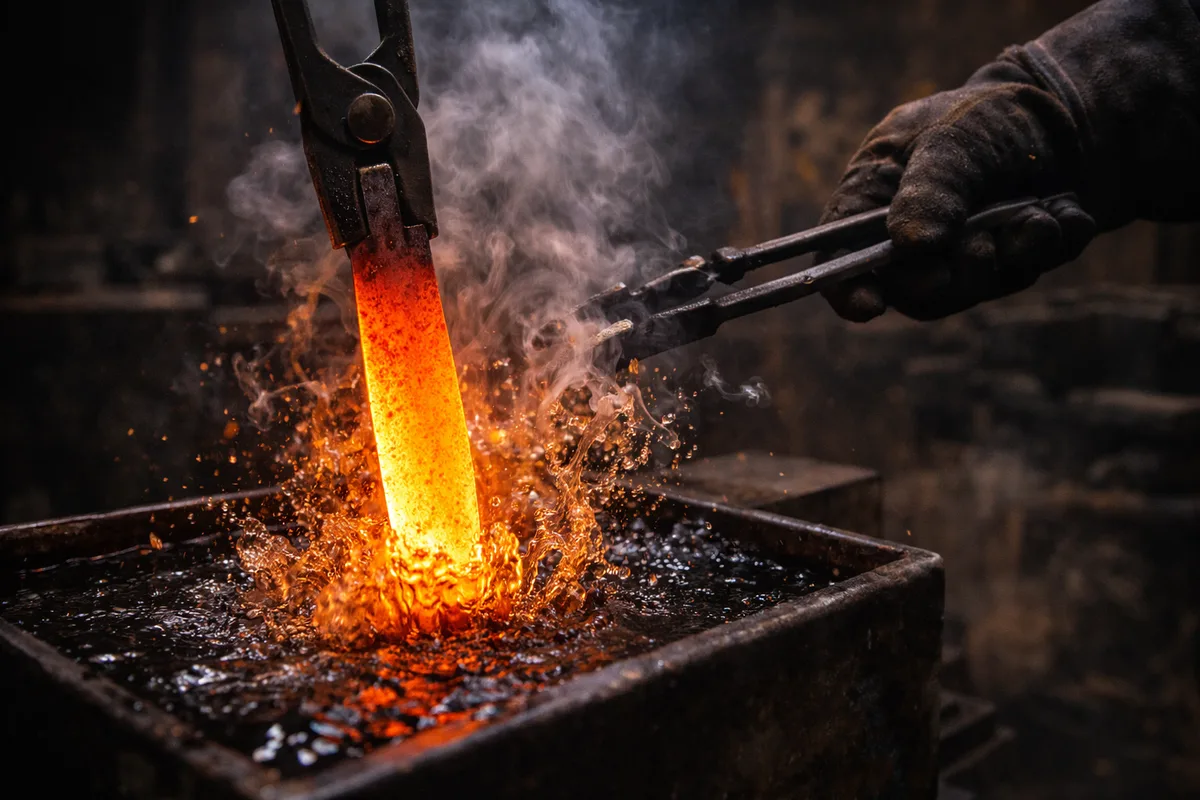 The eternal question: oil or water? The answer depends on your steel.
"Should I quench in oil or water?"
It's one of the most common questions from new bladesmiths. And the answer matters — use the wrong quenchant, and you'll crack your blade or end up with a soft knife.
Quick answer: For most knife steels, oil is safer and more versatile. Water is faster but riskier. The right choice depends on your specific steel's hardenability.
Let's break down when to use each, why, and how to do it right.
Quick Decision Guide
| Your Steel | Recommended Quenchant | Why |
|---|---|---|
| 1095, W1, W2 | Water or brine | Low hardenability, needs fast quench |
| 1084, 1080, 1075 | Oil (fast) | Medium hardenability |
| 80CrV2, 5160 | Oil (any speed) | Good hardenability |
| 52100, O1 | Oil (medium-slow) | High hardenability |
| Air-hardening (A2, D2) | Air or plates | Very high hardenability |
When in doubt: Use oil. You might get incomplete hardening (fixable), but you won't crack the blade (permanent).
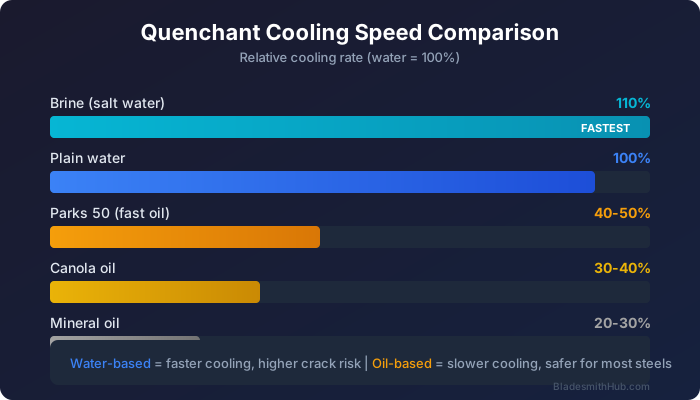 Relative cooling speeds of different quenching media
The Science: Why Quench Speed Matters
What Happens During Quenching
When you heat steel to its hardening temperature, the crystal structure transforms to austenite. To harden the steel, you need to cool it fast enough to transform austenite into martensite (the hard stuff).
The critical factor: how fast you need to cool.
COOLING RATE VS HARDNESS:

Too Slow          Just Right         Too Fast
    ↓                 ↓                  ↓
    │                 │                  │
Soft steel      Full hardness      Cracked blade
(pearlite)      (martensite)       (thermal shock)
Hardenability Explained
Hardenability = how fast a steel needs to cool to fully harden.
| Hardenability | Meaning | Quench Needed |
|---|---|---|
| Low | Needs very fast cooling | Water or brine |
| Medium | Needs moderately fast cooling | Fast oil |
| High | Can harden with slower cooling | Any oil |
| Very High | Can harden in air | Air cool |
What affects hardenability:
- Manganese — increases hardenability
- Chromium — increases hardenability
- Molybdenum — increases hardenability
- Plain carbon — low hardenability by itself
This is why 1095 (low manganese) needs water, but 80CrV2 (has chromium, vanadium) can use oil.
Water Quench: Fast and Dangerous
Cooling Speed
Water cools steel approximately 5-10x faster than oil at the same temperature.
| Quenchant | Relative Cooling Speed |
|---|---|
| Brine (salt water) | Fastest (110%) |
| Plain water | Very fast (100%) |
| Fast oil (Parks 50) | Fast (40-50%) |
| Canola oil | Medium (30-40%) |
| Mineral oil | Slow (20-30%) |
When Water is Required
Some steels simply won't fully harden in oil:
| Steel | Why Water |
|---|---|
| W1, W2 | "W" stands for water-hardening |
| 1095 | Low manganese = low hardenability |
| 1090+ | Very high carbon, low alloy |
| Some file steels | Often W1 or similar |
If you try to oil-quench these steels, you'll get:
- Incomplete hardening
- Soft blade (file bites)
- "Shallow hardening" (hard case, soft core)
Risks of Water Quench
1. Cracking — The biggest risk. Thermal shock from rapid cooling can crack blades, especially:
- Thin edges
- Sharp corners
- Complex geometries
- Thick-to-thin transitions
2. Warping — Fast, uneven cooling causes more distortion
3. Steam jacket — Water can form a vapor barrier around the blade, causing uneven hardening. Requires aggressive agitation.
Water Quench Technique
If you must water quench:
WATER QUENCH PROTOCOL:

1. PREPARATION
   □ Water at room temperature (70°F / 21°C)
   □ Add salt for brine (optional, faster)
   □ Large container (5+ gallons)
   □ Aggressive agitation plan

2. BLADE PREP
   □ Edge at 1.5mm+ (thicker than oil quench)
   □ All corners radiused
   □ No stress risers

3. QUENCH
   □ Transfer in <2 seconds
   □ Edge first, straight down
   □ AGGRESSIVE agitation (not gentle)
   □ Full submersion until cool
   □ Check immediately — temper within 10 min

4. EXPECT
   □ Higher warp rate
   □ Some surface cracking possible
   □ Harder final product
Brine Quench
Adding salt to water (brine) makes it quench even faster by breaking up the steam jacket.
Recipe: 5-10% salt by weight (about 1 cup per gallon)
Use for: W1, W2, 1095 when maximum hardness is needed
Warning: Even more aggressive than plain water. Higher crack risk.
Oil Quench: Slower and Safer
Why Oil Works Better for Most Steels
Oil's slower cooling rate means:
- Less thermal shock
- Fewer cracks
- More controlled transformation
- More forgiving process
For steels with adequate hardenability, oil gives you full hardness with much less risk.
Types of Quench Oil
| Oil Type | Speed | Best For | Cost |
|---|---|---|---|
| Parks 50 | Fast | 1084, 1080, medium carbon | $$$ |
| Parks AAA | Medium | 52100, O1, alloy steels | $$$ |
| Canola oil | Medium | Most knife steels | $ |
| Peanut oil | Medium | Similar to canola | $ |
| Mineral oil | Slow | High-alloy steels | $ |
| ATF (transmission fluid) | Fast | Budget option, works | $ |
Commercial vs Kitchen Oils
Commercial quench oils (Parks 50, etc.):
- Consistent batch-to-batch
- Engineered cooling curves
- Higher flash point (safer)
- More expensive
Kitchen oils (canola, peanut, vegetable):
- Cheap and available
- Work well for most steels
- Slightly variable
- Lower flash point (fire risk)
Experience note: Many bladesmiths use canola oil for their first 100+ blades before buying Parks 50. The difference? Parks is more consistent. Canola works fine, but occasional soft spots disappear with Parks. For learning, canola is perfect. For production, commercial oils are worth it.
Oil Temperature Matters
This is critical and often overlooked:
| Oil Temp | Effect |
|---|---|
| < 70°F (21°C) | Too cold — cracks |
| 70-100°F (21-38°C) | Cold — some risk |
| 100-120°F (38-49°C) | Good |
| 120-140°F (50-60°C) | Ideal for most steels |
| > 150°F (65°C) | Too hot — incomplete hardening |
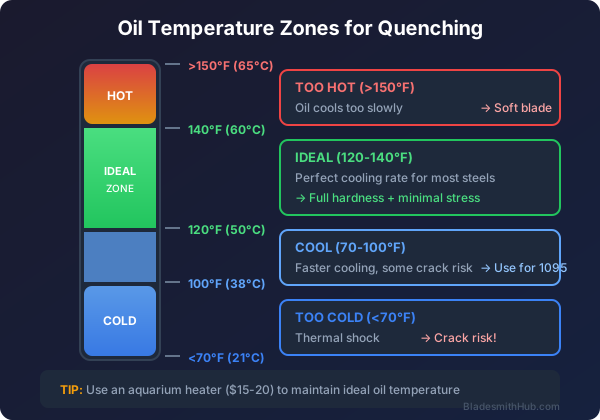 Visual guide to oil temperature zones for quenching
How to heat oil:
- Aquarium heater ($15-20) — set and forget
- Quench scrap steel first — warms the oil
- Heat gun — be careful, fire risk
Oil Quench Technique
OIL QUENCH PROTOCOL:

1. PREPARATION
   □ Oil at 120-140°F (50-60°C)
   □ Minimum 1 gallon per blade
   □ Metal container (not plastic)
   □ Fire extinguisher nearby

2. BLADE PREP
   □ Edge at 1mm+ (dime thickness)
   □ Corners radiused
   □ Clean, no flux residue

3. QUENCH
   □ Transfer in 2-3 seconds
   □ Edge first, straight down
   □ Gentle figure-8 agitation
   □ Hold until color gone (~30 sec)
   □ Leave submerged 1-2 minutes

4. AFTER
   □ File test — should skate
   □ Temper within 1 hour
   □ Watch for delayed cracking
Steel-by-Steel Recommendations
Water-Hardening Steels
| Steel | Quenchant | Oil Temp | Notes |
|---|---|---|---|
| W1 | Water/brine | Room temp | High crack risk, clay for hamon |
| W2 | Water/brine | Room temp | Slightly tougher than W1 |
| 1095 | Water or fast oil | Cold | Can try Parks 50 first |
| 1090 | Water | Room temp | Very shallow hardening in oil |
Oil-Hardening Steels
| Steel | Quenchant | Oil Temp | Notes |
|---|---|---|---|
| 1084 | Fast oil | 120-140°F | Canola or Parks 50 |
| 1080 | Fast oil | 120-140°F | Similar to 1084 |
| 1075 | Fast oil | 120-140°F | Very forgiving |
| 80CrV2 | Any oil | 120-140°F | Very forgiving |
| 5160 | Any oil | 120-140°F | Excellent toughness |
| 52100 | Medium oil | 130-150°F | Parks AAA ideal |
| O1 | Medium oil | 130-150°F | "O" = oil hardening |
| O2 | Medium oil | 130-150°F | Similar to O1 |
Air-Hardening Steels
| Steel | Quenchant | Notes |
|---|---|---|
| A2 | Air or plates | Wrap in foil to prevent decarb |
| D2 | Air or plates | Very high wear resistance |
| CPM steels | Per manufacturer | Check specific recommendations |
The Crack Test: Oil First
Here's a practical approach when you're unsure:
Step 1: Try Oil First
Quench a test piece in oil at 120-140°F.
Step 2: File Test
- File skates: Full hardness achieved ✓ — stick with oil
- File bites: Incomplete hardening — try faster oil or water
Step 3: Adjust If Needed
If oil didn't fully harden:
- Try colder oil (room temp)
- Try faster oil (Parks 50)
- If still soft, try water
Logic: An under-hardened blade can be re-heat-treated. A cracked blade is scrap.
Common Mistakes
Mistake 1: Water Quenching Oil-Hardening Steel
What happens: Dramatic crack, often audible "ping"
Example: Quenching 80CrV2 in water
Why it's bad: The steel doesn't need that cooling rate. The excessive thermal shock cracks it.
Fix: Know your steel. When in doubt, oil.
Mistake 2: Oil Quenching Water-Hardening Steel
What happens: Blade comes out soft, file bites into edge
Example: Quenching 1095 in slow mineral oil
Why it's bad: The steel needs fast cooling to transform. Oil is too slow.
Fix: Use faster quenchant (Parks 50, or water if needed)
Mistake 3: Cold Oil
What happens: Crack along edge or at transitions
Example: Quenching in 60°F oil on a cold day
Why it's bad: Cold oil extracts heat too fast at the surface
Fix: Always preheat oil to 120-140°F
Mistake 4: Hot Oil
What happens: Blade is soft despite correct process
Example: Oil heated to 180°F from repeated quenches
Why it's bad: Hot oil cools too slowly for full transformation
Fix: Monitor oil temp, let it cool between blades
Mistake 5: No Agitation
What happens: Soft spots, uneven hardness
Example: Just dropping blade in and leaving it
Why it's bad: Vapor jacket forms, insulating parts of blade
Fix: Gentle agitation for oil, aggressive for water
Interrupted Quench
Advanced technique: Start in one medium, finish in another.
Water-to-Oil Quench
Used for water-hardening steels to reduce crack risk:
- Quench in water for 1-2 seconds
- Transfer immediately to warm oil
- Complete cooling in oil
Why it works: Gets through the critical transformation range quickly (water), then slows cooling for the rest (oil).
For: 1095, W1 when you want reduced cracking
Warning: Timing is critical. Too long in water = crack. Too short = soft.
Oil-to-Air Quench
Used for high-hardenability steels:
- Quench in oil until black (~30-60 seconds)
- Remove and air cool
For: O1, 52100, high-alloy steels
DIY Quench Tank Setup
Basic Setup (Budget)
SIMPLE QUENCH SETUP:

Container: 5-gallon metal paint can ($10)
Oil: 3-4 gallons canola oil ($15-20)
Heater: Aquarium heater 150W ($15-20)
Thermometer: Kitchen thermometer ($5)

Total: ~$50

         ┌─────────────┐
         │             │
         │    OIL      │ ← 4" clearance above blade
         │             │
         │   ~~~~~~    │ ← Oil level
         │             │
         │             │ ← Blade depth needed
         │             │
         │  [heater]   │ ← Aquarium heater
         │             │
         └─────────────┘
Better Setup
IMPROVED QUENCH SETUP:

Container: Steel pipe section, capped bottom
Oil: 2-3 gallons Parks 50
Heater: Purpose-built quench heater
Thermometer: Probe thermometer with alarm
Lid: Metal lid to smother fires

Additions:
- Fire extinguisher (Class B)
- Metal tongs (long handle)
- Heat-resistant gloves
- Outdoor or well-ventilated location
Safety Notes
⚠️ Fire risk is real. Oil can ignite if:
- Oil gets too hot
- Blade is overheated (burning)
- Splashing onto heat source
Precautions:
- Never quench indoors near open flame
- Keep lid handy to smother fire
- Have Class B fire extinguisher ready
- Don't overfill container
FAQ
Can I use motor oil for quenching?
Yes, it works, but it's not ideal. Used motor oil contains contaminants and has inconsistent properties. If you must use it, strain it first. New mineral oil is cheap and better.
Can I reuse quench oil?
Yes, for a long time. Oil degrades slowly with use (oxidation, carbon pickup). Replace when it:
- Smells burnt
- Turns very dark
- Smokes excessively
- No longer quenches properly
Does oil type affect final hardness?
Slightly. Faster oils can achieve marginally higher hardness on borderline steels. For most knife steels, the difference is negligible.
Can I quench 1095 in oil?
Possibly, with very fast oil (Parks 50) kept cool (room temp). Many smiths do it successfully. But you may get incomplete hardening. Test first.
Why does my blade always warp?
Warping comes from uneven cooling. Causes:
- Twisted entry into quench
- Uneven blade thickness
- One side cooling faster (against container wall)
- Not agitating
Can I straighten a blade after quenching?
Yes, while it's still warm (not hot). Work quickly before it cools completely. Clamp during tempering if needed.
Summary: Oil vs Water
| Factor | Oil | Water |
|---|---|---|
| Cooling speed | Slower | Faster |
| Crack risk | Lower | Higher |
| Warp risk | Lower | Higher |
| Steels | Most knife steels | W1, W2, 1095, etc. |
| Forgiveness | More | Less |
| Fire risk | Yes | No |
| Recommended for beginners | Yes | Caution |
The rule: Use the slowest quenchant that will fully harden your steel.
Conclusion
Oil vs water isn't about which is "better" — it's about matching your quenchant to your steel.
General guidelines:
- Start with oil unless you know your steel requires water
- Preheat oil to 120-140°F (50-60°C)
- Know your steel — check its hardenability
- Test first — try oil, file test, adjust if needed
Most modern knife steels are designed for oil quenching because it's safer and more consistent. Water quenching is a specialized technique for specific steels.
When in doubt, oil. A soft blade can be re-hardened. A cracked blade is firewood.
Documenting your quench setup helps you replicate what works. BladesmithHub lets you log quenchant, temperature, and results — searchable when you need it.
Related Articles: