1084 vs 1095 Steel: Which is Better for Beginner Bladesmiths?
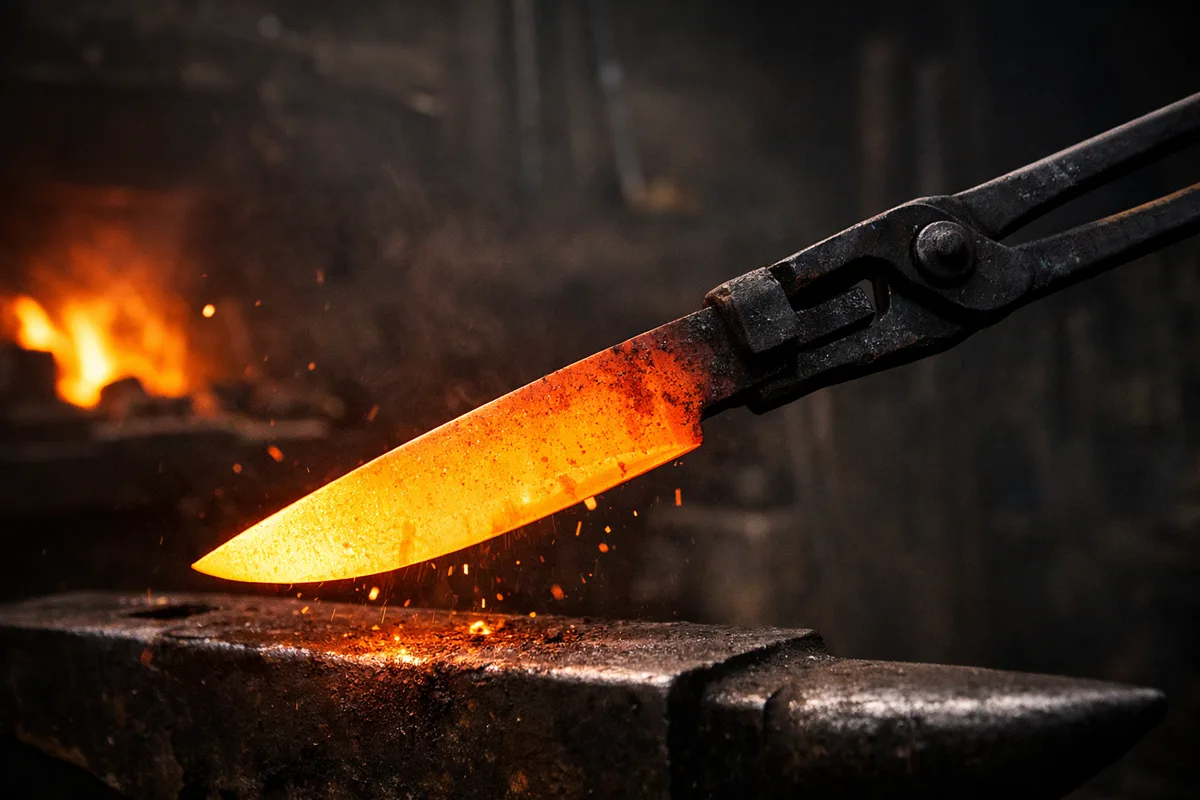 Two of the most popular beginner steels. But which one should you actually start with?
You're ready to make your first knife (or your first few). You've done some research and keep seeing two steels recommended everywhere: 1084 and 1095.
Both are simple carbon steels. Both are affordable. Both make excellent knives. But they're not the same, and for beginners, one is clearly better than the other.
Quick answer: For most beginners, 1084 is the better choice. It's more forgiving during heat treatment, easier to get right, and makes knives that perform just as well for practical use.
But let me explain why, so you can make an informed decision.
Quick Comparison Table
| Factor | 1084 | 1095 | Winner for Beginners |
|---|---|---|---|
| Carbon content | 0.80-0.93% | 0.90-1.03% | — |
| Manganese | 0.60-0.90% | 0.30-0.50% | 1084 (better hardenability) |
| Forgeability | Excellent | Good | 1084 |
| Heat treat forgiveness | Very forgiving | Less forgiving | 1084 |
| Risk of cracking | Lower | Higher | 1084 |
| Edge retention | Very good | Slightly better | 1095 (marginal) |
| Toughness | Higher | Lower | 1084 |
| Ease of sharpening | Easy | Easy | Tie |
| Price | Similar | Similar | Tie |
| Availability | Widely available | Widely available | Tie |
Bottom line: 1084 wins on the factors that matter most for beginners — forgiveness and ease of heat treatment.
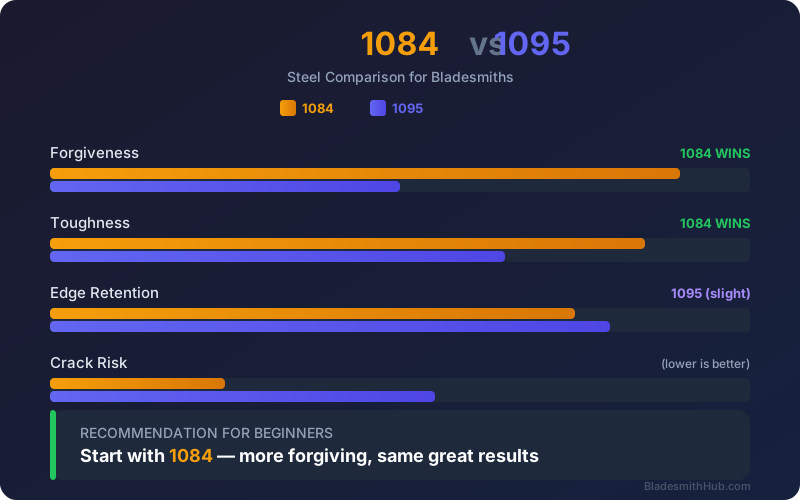 Visual comparison of key factors between 1084 and 1095 steel
The Key Difference: Manganese Content
Here's what most comparisons miss: the real difference isn't just carbon content — it's manganese.
| Steel | Carbon | Manganese |
|---|---|---|
| 1084 | 0.80-0.93% | 0.60-0.90% |
| 1095 | 0.90-1.03% | 0.30-0.50% |
That extra manganese in 1084 does two important things:
1. Better Hardenability
Manganese increases hardenability — how deeply the steel hardens during quenching. This means:
- 1084 can achieve full hardness with a slower quench (oil)
- 1095 needs a faster quench to fully harden (often water or very fast oil)
For beginners, this is huge. Slower quench = less thermal shock = fewer cracked blades.
2. Wider Heat Treatment Window
1084 has a broader "safe zone" for austenitizing temperature. You can be off by 25-50°F and still get good results. 1095 is more sensitive — the same error might give you a soft blade or a cracked one.
Common experience: Many bladesmiths report that switching from 1095 to 1084 causes success rates to jump from about 70% to over 95%. Same forge, same technique — just a more forgiving steel.
Heat Treatment Comparison
This is where the rubber meets the road. Let's compare the actual heat treatment process.
1084 Heat Treatment
NORMALIZING:
  Cycles: 3
  Temps: 1550°F → 1500°F → 1475°F (845°C → 815°C → 800°C)
  Cool: Air cool between cycles

HARDENING:
  Austenizing: 1475°F (800°C)
  Soak time: 10 minutes
  Quench: Oil (canola, Parks 50)
  Oil temp: 120-140°F (50-60°C)

TEMPERING:
  Temperature: 400°F (205°C)
  Time: 2 hours × 2 cycles
  Result: ~60 HRC
Forgiveness level: HIGH
- Can use slower oils (canola works great)
- Temperature window: ±25°F is usually fine
- Low cracking risk with proper edge thickness
1095 Heat Treatment
NORMALIZING:
  Cycles: 3
  Temps: 1500°F → 1475°F → 1450°F (815°C → 800°C → 790°C)
  Cool: Air cool between cycles

HARDENING:
  Austenizing: 1475°F (800°C)
  Soak time: 10 minutes
  Quench: Fast oil (Parks 50) or water
  Oil temp: 70-100°F (21-38°C) — COLD for 1095

TEMPERING:
  Temperature: 400°F (205°C)
  Time: 2 hours × 2 cycles
  Result: ~61 HRC
Forgiveness level: MEDIUM-LOW
- Needs faster quench — water or very fast oil
- Water quench = higher crack risk
- Narrower temperature window
- More sensitive to edge thickness before HT
Side-by-Side Process Comparison
| Step | 1084 | 1095 |
|---|---|---|
| Quench medium | Any oil | Fast oil or water |
| Quench speed needed | Medium | Fast |
| Crack risk | Low | Medium-High |
| Temp sensitivity | Forgiving | Sensitive |
| Beginner success rate | ~90%+ | ~70-80% |
Performance Comparison
Now let's talk about the finished knife. Does the extra difficulty of 1095 pay off in performance?
Edge Retention
1095 wins — but barely.
The higher carbon content in 1095 (0.90-1.03% vs 0.80-0.93%) means it can achieve slightly higher hardness and hold an edge marginally longer.
In practice? Most users can't tell the difference. We're talking maybe 5-10% more cuts before needing a touch-up. For a working knife, this is negligible.
Toughness
1084 wins.
The higher manganese content and slightly lower carbon give 1084 better toughness. It's more resistant to chipping and can handle lateral stress better.
For hard-use knives (batoning, chopping, outdoor work), 1084 is actually the better choice.
Ease of Sharpening
Tie.
Both sharpen easily on common stones. Neither requires special equipment or techniques. Both can achieve scary-sharp edges.
Corrosion Resistance
Tie (both poor).
Both are simple carbon steels with no chromium. Both will rust if not cared for. Both need oil/wax protection and shouldn't be left wet.
Real-World Performance Summary
| Use Case | Better Choice | Why |
|---|---|---|
| Kitchen knife | Either | Both excel, 1084 slightly tougher |
| Outdoor/bushcraft | 1084 | Better toughness for batoning |
| Competition cutting | 1095 | Marginally better edge |
| Everyday carry | Either | Negligible difference |
| Beginner's first knife | 1084 | Forgiveness matters more than performance |
Why 1095 Gets Recommended (And Why It Might Be Wrong)
You'll see 1095 recommended everywhere. Here's why — and why that advice might be outdated:
Historical Reasons
1095 has been a standard for decades. It's the steel in most traditional American knives. When people say "high-carbon steel knife," they often mean 1095.
The "More Carbon = Better" Myth
There's a persistent belief that more carbon automatically means a better knife. While carbon is essential for hardness, the relationship isn't linear. After about 0.80%, you get diminishing returns and increasing brittleness.
What's Changed
Modern understanding of manganese's role has made 1084 the preferred beginner steel among experienced bladesmiths. The consensus has shifted, but old recommendations persist online.
What the experts say:
"1084 is the best steel for beginners to learn heat treatment. It's forgiving enough that you can actually learn what good heat treatment feels like before moving to more demanding steels." — Common sentiment on r/Bladesmith
When to Choose 1095
Despite my recommendation for 1084, there are situations where 1095 makes sense:
1. You Already Have It
If someone gave you 1095 or you found a good deal, use it. It's not that much harder — just requires more attention.
2. You Have Temperature Control
With a proper heat treat oven and thermocouple, 1095's sensitivity becomes manageable. The risk comes from guessing temperatures.
3. You Want Maximum Hardness
For specialty blades where ultimate edge retention matters more than toughness (razors, certain kitchen knives), 1095 can achieve slightly higher working hardness.
4. You're Ready for the Challenge
After you've successfully heat treated 10-20 blades in 1084, trying 1095 is a good learning experience. You'll appreciate the differences.
When to Choose 1084
1. You're Just Starting Out
This is the obvious one. Learn the fundamentals on a forgiving steel, then graduate to more demanding materials.
2. You Don't Have Precise Temperature Control
Working with a forge and eyeballing color? 1084's wider window helps compensate.
3. You're Making Tough-Use Knives
Outdoor knives, choppers, camp knives — anywhere toughness matters, 1084 is actually the superior choice.
4. You Want Consistent Results
Even experienced smiths often prefer 1084 for production work because of its reliability.
A Pattern Seen in the Community
Browse any bladesmithing forum and you'll see a recurring pattern: beginners start with 1095 because older resources recommend it, then switch to 1084 after frustrating results.
The typical experience reported? High failure rates with 1095 (cracking, soft spots, inconsistency), followed by dramatically improved success with 1084. The steel doesn't make anyone a better bladesmith overnight — but it stops punishing small mistakes while learning. That's exactly what a beginner needs.
Heat Treatment Tips for Each Steel
If You Choose 1084
- Quench in warm oil — 120-140°F (50-60°C)
- Canola oil works fine — No need for expensive Parks 50
- Leave edge thick — 1mm+ before heat treatment
- Temper immediately — Within an hour of quenching
- Two temper cycles — 2 hours each at 400°F (205°C)
For detailed instructions, see: 1084 Steel Heat Treatment Recipe
If You Choose 1095
- Use fast oil or water — Parks 50, or water with salt (brine)
- Keep oil room temp or cooler — 1095 needs fast cooling
- Be precise with temperature — Use a thermocouple
- Extra careful with edge thickness — 1.2mm+ minimum
- Temper immediately — 1095 is more prone to cracking if left
- Consider a clay coat — For differential hardening (hamon)
Cost and Availability
Both steels are similarly priced and widely available.
Typical Prices (US)
| Steel | 1/8" × 1.5" × 12" bar | Source |
|---|---|---|
| 1084 | $8-12 | NJSB, Alpha, Admiral |
| 1095 | $8-12 | NJSB, Alpha, Admiral |
Where to Buy
United States:
- New Jersey Steel Baron (NJSB) — Most popular, reliable
- Alpha Knife Supply
- Admiral Steel
- Jantz Supply
Note: Always buy from reputable knife steel suppliers. "Mystery steel" from hardware stores is not the same and won't behave predictably.
FAQ
Can I harden 1084 in water?
You can, but you shouldn't. 1084 doesn't need water quenching, and using water increases crack risk for no benefit. Stick with oil.
Can I harden 1095 in oil?
Yes, but use a fast oil like Parks 50, and keep it cool (room temperature). Slow oils like canola may not cool fast enough for full hardness.
Which steel makes a better kitchen knife?
Both work well. I slightly prefer 1084 for kitchen knives because the extra toughness helps with thin edges that might otherwise chip.
Is 1095 "better" than 1084?
Not objectively. 1095 can achieve marginally higher hardness and edge retention. 1084 has better toughness and is easier to heat treat. Neither is universally better — they have different strengths.
Should I try both?
Eventually, yes. But start with 1084 to learn proper technique, then try 1095 to understand how different steels behave.
The Verdict
For beginners: Start with 1084.
Here's the logic:
- Your early knives will have heat treatment mistakes
- 1084 forgives those mistakes; 1095 doesn't
- The performance difference is marginal
- A successfully heat-treated 1084 blade beats a cracked 1095 blade every time
Once you're consistently getting good results with 1084, you'll have the skills to handle 1095 and other more demanding steels.
The goal isn't to use the "best" steel — it's to make the best knives you can. And for a beginner, that means using a steel that lets you focus on learning rather than fighting the material.
Tracking which steel you use and how it performs helps you make better choices. BladesmithHub makes this easy — log each blade in 30 seconds, search by steel or result.
Related Articles: